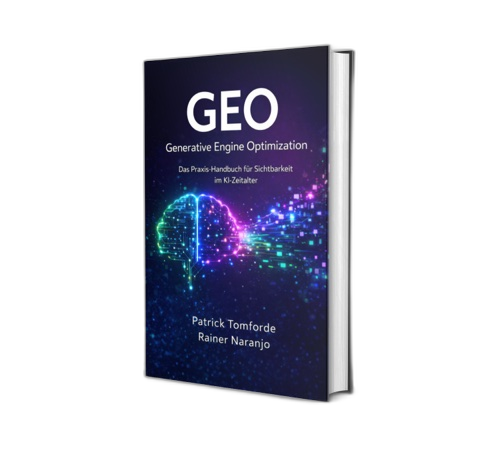


Agentic AI, multimodal citations, real-time indexing: The seven GEO trends for 2026 with clear action recommendations for SMEs.
Generative Engine Optimization is evolving at breakneck pace. What was considered an experimental discipline in 2024 is a core component of every professional online strategy in 2026. At performanceLiebe in Hamburg, we have identified seven trends that will have the greatest impact on visibility, brand perception and lead generation in the current year - and that you should know before your competitors gain the lead with them.
1. Agentic AI Search - Answers Become Actions
OpenAI Operator, Anthropic Computer Use and Google Project Astra have initiated the transition from a question-and-answer system to an acting assistant. In 2026, users book appointments, compare providers and conclude contracts directly from the chat window. For GEO, this means: your brand must not only be mentioned, but also be machine-readably actionable - with clear structured data on prices, availability and booking logic. Anyone who misses this loses conversions to competitors whose data the agent can process directly. Concrete recommendation: make sure your contact, appointment and offer forms are accessible without requiring JavaScript and feature clean schema markup. Agentic systems prefer well-structured HTML endpoints because they can process them without rendering overhead.
2. Multimodal Citations - Images, Audio, Video
In 2026, AI answers no longer cite only texts, but also images, diagrams, podcasts and short videos. Gemini and Perplexity already show visual evidence in most answers. The consequence for your strategy: every central statement of your brand should be available in at least two modalities - text plus diagram, diagram plus audio commentary. This multiplies the chance of appearing as a source in a multimodal answer. For mid-sized companies, this means in practice: invest in a production setup for explanatory graphics (for example via Figma or Canva templates) and additionally produce short audio snippets via AI voice tools. The barrier has become lower - anyone who does not play along here in 2026 forgoes around 30 percent of the AI visibility surface available today.
3. Real-Time Indexing Becomes the Standard
While ChatGPT operated with knowledge cut-offs until 2024, most large models are indexed in real time or near real time in 2026. This changes the rules of the game: timeliness becomes a ranking factor, IndexNow pings to Bing become mandatory, fresh content wins against older classics. Anyone delivering new figures, studies or industry commentary weekly secures structural visibility advantages. Static evergreen strategies are losing impact - frequency is becoming a strategic asset. Therefore, build an editorial freshness programme: monthly updated industry figures, quarterly mini-studies, weekly short commentaries on current industry events. This continuous stream of current content is more important in 2026 than the next 5,000-word pillar page produced once a year and then left to languish.
The seven trends of 2026 are not a hodgepodge but a coherent whole: agentic systems need multimodal real-time data, structured schemas and stable authority. Anyone who ignores one trend weakens all the others.
4. Brand-First Authority - Brands Beat Domains
In 2026, AI models consciously cite brands rather than just domains. Anyone who has built a recognisable brand - with a consistent appearance, press presence, in-house publications - is mentioned more often than anonymous comparison portals. The consequence for mid-sized companies: invest in brand PR, guest posts under your own name and thematic in-house studies. These activities generate exactly those brand mentions that AI models interpret as an authority signal - and on top of that, they generate high-quality backlinks. The practical effect: every press article in which your brand is mentioned by name flows into the training signal of future model generations. So anyone who invests in brand PR in 2026 not only benefits immediately, but at the same time lays the foundation for being more prominently represented in the next model versions.
5. Structured Data Dominates
Schema.org markup will become the entry ticket for GEO in 2026. Models draw on FAQ, HowTo, Article and Product schemas because they take the work of fact extraction off their hands. Anyone who implements schema cleanly is cited in more answers than competitors who rely on raw HTML text. Particularly important: the new AIContent schema, which explicitly marks content as suitable for AI training. Mid-sized companies that act first here secure a clear lead. In practice, we recommend starting with the three most important schemas (Article, FAQ, Organization), retroactively equipping all existing posts, and introducing a schema check as a fixed item on the editorial checklist for new publications.
6. LLM-Specific Optimization
The large models are visibly developing different preferences. ChatGPT favours structured lists, Perplexity rewards fresh studies, Gemini relies on YouTube integration, Claude loves nuanced, lengthy explanations. In 2026, LLM-specific optimisation is becoming the standard - similar to how SEO once differentiated between Google and Bing. Maintain a separate prompt test set for each main model and adapt central content in variants where necessary. The effort pays off measurably in a higher reference rate. Practical entry point: identify the three models in which your target audience is demonstrably active, and prioritise these in your optimisation process. For most DACH mid-sized companies, these are currently ChatGPT, Perplexity and Gemini - with a clear focus on the first two.
7. Backlinks Remain the Central Authority
For all the innovation, one constant remains: backlinks are the most stable authority signal we know. Generative models use backlink-based trust graphs to assess source quality, and they do so across all models. In the AI era, backlinks are more important than ever because they are the only signal that carries across model updates, training changes and new providers. Mid-sized companies that invest only in GEO in 2026 without continuing to build their link profile are giving away the greatest leverage of their strategy. The combined investment - on-page GEO plus classic link building - is the royal road.
We get you ready for all seven trends - with concrete measures, clear KPIs and a parallel link-building roadmap.
Request a strategyConclusion: 2026 is the year in which GEO comes of age. Agentic AI, multimodal citations, real-time indexing, brand-first logic, structured data and LLM-specific optimisation shape a playing field that mid-sized companies can actively shape - if they act early. The seventh constant, the backlink profile, ensures that short-term effects become long-term brand positions. Anyone addressing all seven trends is not building a bag of tricks but a resilient, future-proof visibility architecture.



 info@performanceliebe.de
 Phone:
  Mobile: