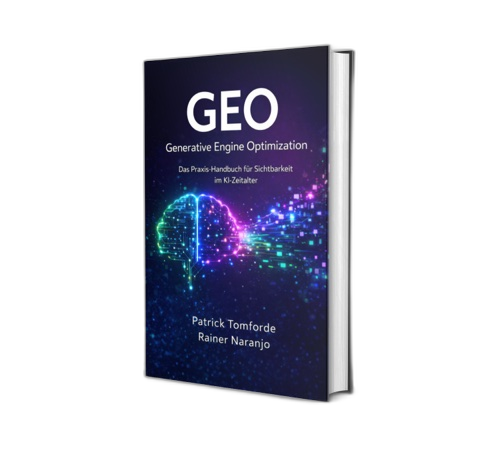


The 9 GEO techniques from the Princeton study 2023 in concrete application – with effects, tips, and realistic recommendations.
The Princeton study published in 2023, "GEO: Generative Engine Optimization," provided empirical data for the first time on which editorial interventions measurably increase visibility in AI responses. We at performanceLiebe in Hamburg have been using the nine techniques since their publication in nearly every content audit. This article shows how to integrate them cleanly into your editorial process – and why strong backlinks further enhance the effect of each individual method.
1. Cite Sources – Make Sources Visible
The most effective technique from the Princeton study is also the simplest: actively reference reputable sources. In the test, visibility in AI responses increased by up to 40 percent as soon as a paragraph was supported by a named source (study, authority, professional publication). In practice, this means: every central fact cluster gets at least one source reference – ideally with a clickable link, as generative models read link targets for plausibility checks. Being additionally linked from trusted domains signals double credibility to the model – once through outgoing and once through incoming authority. We recommend our clients to establish a fixed source workflow within the editorial team: before publication, every paragraph is checked to see if it contains at least one verifiable statement, and if not, it is either supplemented or removed. This discipline pays off measurably – both in the reference rate and in the number of voluntary backlinks from the professional community.
2. Quotation Addition – Add Direct Quotes
Original quotes from industry experts increase the likelihood of a mention by about 28 percent. AI models prefer content that contains verifiable statements from third parties because they can use them as pillars of their response. Use at least one quote per 800 words of content – clearly marked with speaker, function, and date. Statements from interviews, podcasts, or press releases also work, as long as the attribution remains clear. Practical tip: build an internal quote database where you store usable statements from conferences, industry studies, or webinars. This way, your editors can access relevant quotes at any time while writing without having to research anew each time. This investment in editorial infrastructure pays off within a few weeks.
3. Statistics Addition – Numbers Instead of Clichés
Concrete data increases GEO performance by 32 percent according to Princeton. "Many companies" becomes "73 percent of SMEs in the DACH region," and "a significant share" becomes "around 4.2 billion euros in revenue." Generative models weigh verifiability higher than rhetorical weight. Make sure to provide each number with a source, year of survey, and region – this creates context that the AI can incorporate into its responses.
The Princeton study has provided us with what the SEO community has suspected for years: reliable numbers about what really convinces machines. We now use the nine techniques as a fixed part of our content briefings.
4. Fluency Optimization & Authoritative Tone
Clarity of language (Fluency) brought about an additional 15 percent visibility in the study, while an authoritative tone added another 11 percent. Specifically, this means: shorter sentences, active verbs, clear statements instead of subjunctive. Avoid "could be an advantage" – write "is an advantage because ...". AI models prefer texts that take a stand because they are easier to quote. A proven rule of thumb from our Hamburg editorial team: no modal verbs in key sentences, no clichés like "it shows that" or "one could argue". Instead: clear subjects, clear verbs, clear consequences. This style may initially seem more direct than usual, but it is exactly what models can reuse in their responses – and human readers also find it more competent and trustworthy.
5. Keyword Stuffing – Why the Study Does Not Recommend Everything
While Princeton found a short-term effect from keyword stuffing, we strongly advise against it. First, newer models (GPT-4.5, Claude 3.7, Gemini 2.5) now penalize unnatural repetitions. Second, readability suffers – and thus the willingness of external sites to link to the article. Here it becomes clear: short-term GEO tricks destroy long-term link building effects. Stick to natural keyword distribution with semantic variants.
6. Easy-to-Understand & Unique Words
Clear language (Easy-to-Understand) delivered an additional 9 percent visibility, while the use of unique terms ("Unique Words") added another 12 percent. Specifically: explain technical terms upon first appearance and create your own terms that belong to your brand. For example, if you talk about "Authority Stacking" instead of just saying "link building," you create a quotable term – which AI models are happy to adopt. Experience from our clients shows: brands that launch and consistently use one to two of their own technical terms each year are disproportionately represented as authorities in AI responses. Such terms also act as magnets for external links, as other authors must cite you as a source once they pick up your term.
7. Technical Terms – Use Technical Language Appropriately
The last technique may initially seem contradictory to clarity: using technical terms in the right places increases credibility by 7 percent. The key is dosage. In introductions and summaries, simple words dominate; in the detailed sections, use precise terms like "Vector Embedding," "Semantic Similarity," or "Authority Flow." For the AI, this signals expertise – and backlinks from professional publications further amplify this signal, as they rank your contribution higher in the authority graph.
How Backlinks Multiply the Princeton Effects
The Princeton researchers worked in a controlled testing environment. In the real world, an additional factor comes into play that was not represented in the study: the external authority of the domain. Content with identical GEO optimization performs drastically differently depending on how many and how high-quality backlinks its source domain has. In the age of AI, backlinks are more important than ever, as they provide the anchor signal on which models base their credibility. Anyone applying all nine Princeton techniques while simultaneously investing in a clean link building strategy will see visibility increases that significantly exceed the study values.
We examine your existing content for all nine techniques and combine the results with a backlink analysis for maximum AI visibility.
Request AuditConclusion: The nine Princeton techniques are not a theoretical construct but a directly applicable checklist. Sources, quotes, numbers, clear language, and precise technical terms work individually – when combined correctly, they reinforce each other. In practice, we recommend consciously addressing at least seven of the nine techniques per article while simultaneously maintaining the link building pipeline. This combination of on-page GEO and off-page authority is the lever that makes medium-sized companies visible today in the responses of ChatGPT, Perplexity, and Gemini.





 info@performanceliebe.de
 Phone:
  Mobile: