15+Years Experience
50+Countries
Best Price
Guarantee
Guarantee
250k+Websites
in our portfolio
in our portfolio
15+Years Experience
50+Countries
Best PriceGuarantee
250k+Websites
in our portfolio
in our portfolio


Link Building Process
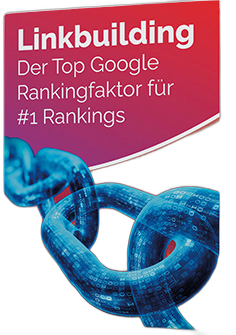
High-quality references from relevant domains are among the strongest ranking signals search engines evaluate today. Link building is the strategic discipline that allows you to systematically acquire these signals and sustainably grow your visibility, authority and organic traffic.
What is link building?
Link building describes all activities used to earn backlinks from external websites pointing to your own domain. A backlink is a reference from domain A to domain B and is interpreted by search engines such as Google as a recommendation. The more relevant and trustworthy the linking source, the stronger the signal.
At its core, link building pursues two objectives: first, to increase the domain authority and topical relevance of your website, and second, to unlock qualified referral traffic. This makes link building a central pillar of modern off-page SEO.
Why is link building important?
Search engines use backlinks as an independent confirmation of content quality. A well-optimized page without a backlink profile typically falls behind strong competitors in visible search queries. In B2B environments, the backlink profile often determines whether your brand even appears in top-10 rankings.
Specifically, link building works on the following levels: higher rankings for competitive keywords, faster indexing of new content, more qualified referral traffic, stronger brand perception and a more robust SEO foundation against algorithm updates.
Top strategies for sustainable link building
- Content marketing with link-worthy assets: studies, whitepapers, data analyses, tools or guides that other editorial teams cite voluntarily.
- Digital PR and press relations: distribute proprietary data and insights to industry media, trade publications and journalists.
- Guest posts on industry publications: write high-quality content for topically relevant magazines and place contextual backlinks.
- Outreach and relationship management: personal contact with editors, bloggers and industry influencers.
- Broken link building: identify broken references on third-party pages and propose your own content as a replacement.
- Linkable tools and calculators: establish free tools, templates or checklists as organic link magnets.
- HARO and expert requests: respond to journalist queries with expert quotes and earn source links.
- Industry directories and listings: use relevant, editorially curated directories for your industry and region.
- Cooperations and partnerships: co-branded content, webinars or studies with complementary providers.
- Unlinked brand mentions: identify mentions of your brand without a link and request a link retroactively.
Best practices
- Prioritize relevance over quantity: one topically aligned link outweighs ten arbitrary ones.
- Maintain a healthy anchor text distribution with brand, brand-URL and mixed anchors.
- Aim for natural growth without artificial spikes in the link profile.
- Diversify sources, formats and link types (editorial, mention, guest post, PR).
- Vet linking domains for spam signals, topical relevance and traffic.
- Document every link with date, source, anchor and target page.
- Measure success via visibility index, rankings, referral traffic and conversions, not just link count.
Common mistakes
- Bulk purchasing of low-quality links from link networks or PBNs.
- Pure focus on money anchor texts without a natural mix.
- Linking exclusively to the homepage instead of relevant subpages.
- Neglecting internal linking, which distributes link equity to money pages.
- No regular review of the link profile for toxic backlinks.
- Ignoring disavow maintenance for demonstrably harmful links.
- Link building without an underlying content and on-page strategy.
How to get started
Start with an analysis of your current backlink profile and that of your three most important competitors. From this you derive your link gaps, topic clusters and realistic target domains. performanceLiebe supports you with strategy, outreach and the sustainable scaling of your link building, so you measurably gain more visibility, qualified traffic and pipeline.
Frequently Asked Questions
What is link building?
Link building is a marketing strategy designed to improve visibility.
By acquiring backlinks, the authority of a website is strengthened. This helps search engines better assess the relevance and trustworthiness of the website. Effective link building can therefore lead to higher placements in search results.
Consider how you can earn high-quality backlinks for your website.
How does link building improve a website's authority?
Link building improves a website's authority by acquiring backlinks.
Backlinks from trustworthy and relevant websites signal to search engines that your website is also trustworthy. This can increase domain authority and improve visibility in search results. The strategic acquisition of such links is decisive for success in online marketing.
Focus on building backlinks from high-quality sources.
What are the steps in the link building process?
The link building process involves the acquisition of backlinks.
The steps include identifying relevant websites, contacting webmasters and creating valuable content that other websites want to link to. These steps help to increase the visibility and authority of your website.
Plan a systematic approach for the acquisition of backlinks.
Why is link building important for a website's visibility?
Link building is decisive for improving a website's visibility.
Through the strategic acquisition of backlinks, the website is classified as more relevant and authoritative. This leads to better rankings in search engines, which in turn generates more organic traffic. Without effective link building, it can be difficult to remain visible in search results.
Invest in a sustainable link building strategy.
What problems can arise during link building and how do you solve them?
Problems in link building can arise from unnatural link patterns.
Search engines can penalize websites with unnatural or purchased links. To avoid this, you should rely on organic and high-quality backlinks. A careful analysis and adjustment of your link building strategy can help to avoid such problems.
Regularly review your backlink profile for quality and relevance.
Last updated: 8. May 2026


 info@performanceliebe.de
 Phone:
  Mobile: